 bbauer@beinj.com
 609-587-6322


As smart home technology continues to evolve, the foundation that supports it becomes increasingly important. In 2026, homeowners planning a new build or a major renovation are faced with a critical decision: rely entirely on wireless connectivity or invest in a low-voltage cabling infrastructure. The answer, according to industry experts, is a hybrid approach that combines the stability of wired connections with the convenience of wireless at the device level. Understanding the role of low-voltage cabling in a smart home can save time, reduce frustration, and protect the value of your property for years to come.
The global low-voltage wire and cable market was valued at roughly USD 145.7 billion in 2024 and is projected to grow at a compound annual growth rate of 7.2% from 2025 through 2034. This growth reflects the increasing demand for data, security, and automation systems in residential and commercial spaces. In fact, nearly 70% of new homes are built with low-voltage systems, an industry estimate that highlights how essential these networks have become. For homeowners in central New Jersey and eastern Pennsylvania, working with an experienced electrical contractor like Bauer Electric Inc. ensures that low-voltage cabling meets current NEC requirements and supports future technologies.
Why Low-Voltage Cabling Still Matters in 2026
Low-voltage wiring operates at 50 volts or less, typically at 12V, 24V, or 48V. This makes it safer to handle than standard line voltage (120V to 240V), and it is used for data, communication, security cameras, doorbells, thermostats, lighting control, and audio systems. In a smart home, these cables carry the signals that make automation possible. Without a robust wired backbone, even the best smart devices can underperform.
Wireless Limitations and the Hybrid Approach
Wireless signals face inherent limitations. Interference from neighboring networks, signal attenuation through walls and floors, bandwidth congestion from multiple devices, and latency can all degrade performance. In a house with dozens of connected devices, relying solely on WiFi often leads to dropped connections and slow response times. A hybrid approach resolves these issues by using structured wiring for the backbone connections and reserving wireless for the device edge. This means your smart hub, network switches, and wireless access points are all connected via Ethernet cable, while end devices like smart bulbs and sensors use WiFi or Zigbee to communicate back to the hub. The result is a stable, low-latency network that can handle the demands of a fully automated home in 2026.
Future-Proofing with Category 6 and Beyond
Structured wiring using Category 6 or higher Ethernet provides the most stable foundation for smart home automation systems. Cat6 cable offers speeds up to 10 Gbps over short distances, while Cat6a maintains 10 Gbps over longer runs up to 328 feet. Cat6a is slightly bulkier and more expensive but is considered future-ready. For homeowners who want to be prepared for next-generation data demands, installing Cat6a during construction or renovation is a wise investment. Fiber optic cable offers unmatched speed and bandwidth but requires complex installation and specialized termination, making it less common in residential settings today. Cat5e is now outdated for new installations, as it tops out at 1 Gbps.

Key Low-Voltage Wiring Standards and Codes
Low-voltage wiring is covered by several articles in the National Electrical Code (NEC). Understanding these standards helps homeowners ensure their installation is safe and compliant. Local building codes may adopt specific editions of the NEC, so it is important to verify requirements with the local authority having jurisdiction (AHJ).
NEC Articles to Know
NEC Article 725 covers low-voltage circuits and power-limited circuits. Article 805 addresses communications circuits, including telephone and data wiring. Article 820 applies to coaxial cable systems, such as those used for cable television or satellite. Article 770 governs optical fiber cables. A licensed electrical contractor will be familiar with these requirements and can ensure that low-voltage cabling is run safely away from high-voltage lines, properly supported, and not subject to damage. In many jurisdictions, low-voltage work may not require a separate permit, but local rules vary. Always check with your contractor or local building department.
Choosing the Right Cable for Your Smart Home
For Ethernet connections, Cat6 is currently the most popular choice. It supports 10 Gbps over short distances and is widely available. If you plan to future-proof your home for the next decade, Cat6a is the better option. For in-wall or ceiling speaker installations, always use CL2 or CL3-rated cable. These ratings indicate that the cable meets fire safety standards for installation inside walls. For security cameras, video door stations, and wireless access points, Power over Ethernet (PoE) is extremely useful. PoE delivers both data and power over a single Ethernet cable, eliminating the need for separate electrical outlets at each device location. This simplifies installation and keeps the system clean and organized.
Planning Your Smart Home Wiring
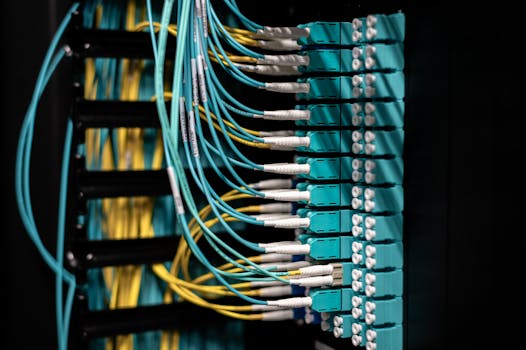
Early planning is the key to a successful smart home installation. Before any drywall goes up, homeowners should consider equipment and rack locations, wiring paths, lighting layout, shade wiring, electrical coordination, and networking access point placement. A centralized structured cabling layout brings all Ethernet cables back to a central network location, often called a structured media enclosure or network rack. This central point houses the router, switch, and patch panel, making it easy to manage and troubleshoot the entire network.
Centralized Control and Consistent Performance
A well-integrated smart home in 2026 should offer centralized control, consistent performance, fewer apps, and automation that works reliably. The foundation of this experience is the data network and WiFi setup. By running Cat6 or Cat6a Ethernet cables to fixed smart devices such as smart TVs, gaming consoles, desktop computers, and wireless access points, you offload heavy traffic from the WiFi spectrum. This leaves more bandwidth for mobile devices and IoT gadgets. Additionally, a hardwired backbone reduces latency for time-sensitive applications like home security and whole-house audio.
Electrical Considerations for Smart Homes
Low-voltage wiring does not exist in isolation. The electrical service panel must be adequate for the home’s total load. A 200-amp service is common for many homes, but larger homes may require 400 amps or load management strategies. Before adding smart home components, run load calculations to ensure the panel is not overloaded. It is also important to confirm that neutral wires are present at switch boxes, as many smart switches require a neutral connection. Whole-home surge protection is highly recommended for smart homes with sensitive electronics. A power surge can damage expensive smart hubs, network equipment, and connected devices, so protecting the entire panel is a cost-effective precaution.
The Benefits of Professional Installation
While some low-voltage projects can be tackled by a knowledgeable DIYer, a professional electrical contractor brings expertise that protects both the investment and the safety of the home. A contractor will pull permits where required, follow NEC guidelines, and test every cable run to ensure proper termination and performance. Homes with professionally installed cabling systems are more attractive to buyers because they offer improved connectivity and a future-proof design. For homeowners in Mercer County, Burlington County, or Bucks County, working with a company like Bauer Electric Inc. that has served the area since 1973 ensures decades of experience with both standard electrical work and low-voltage smart home systems.
The 2026 smart home is not just about the latest gadgets. It is about a reliable, scalable network that supports everything from security cameras to automated lighting. Low-voltage cabling remains the backbone of that network, providing the speed and stability that wireless alone cannot guarantee. Investing in structured wiring today prepares your home for the technologies of tomorrow, and partnering with a professional contractor ensures the job is done right the first time.

Frequently Asked Questions
Do I need a permit for low-voltage cabling in my home?
Permit requirements vary by local jurisdiction. Some areas do not require a permit for low-voltage installations, while others do. It is important to check with your local building department or work with a licensed electrical contractor who can verify requirements and pull any necessary permits for you.
Can I use existing coaxial cable for smart home data?
Coaxial cable, covered under NEC Article 820, can be used for cable television and satellite systems but is not a direct replacement for Ethernet. MoCA adapters allow you to use coaxial wiring to extend a network, but a dedicated Cat6 or Cat6a cable installation provides superior performance and reliability for smart home devices.
What is Power over Ethernet and why is it useful?
Power over Ethernet (PoE) delivers electrical power and data over a single Ethernet cable. This is especially useful for security cameras, wireless access points, and video door stations because it eliminates the need for a separate power outlet at each device. PoE simplifies installation and reduces clutter.
How long does a low-voltage wiring installation take for a new home?
The timeline depends on the size of the home and the complexity of the system. During new construction, low-voltage cabling is typically installed after the framing and before drywall. A professional contractor can complete the rough-in wiring in a few days, followed by termination and testing once drywall is finished.
Low-voltage cabling is the silent foundation of a truly smart home. By choosing the right cables, planning for centralized control, and working with an experienced electrical contractor, homeowners in New Jersey and Pennsylvania can build a system that works reliably now and adapts to future innovations.