 bbauer@beinj.com
 609-587-6322

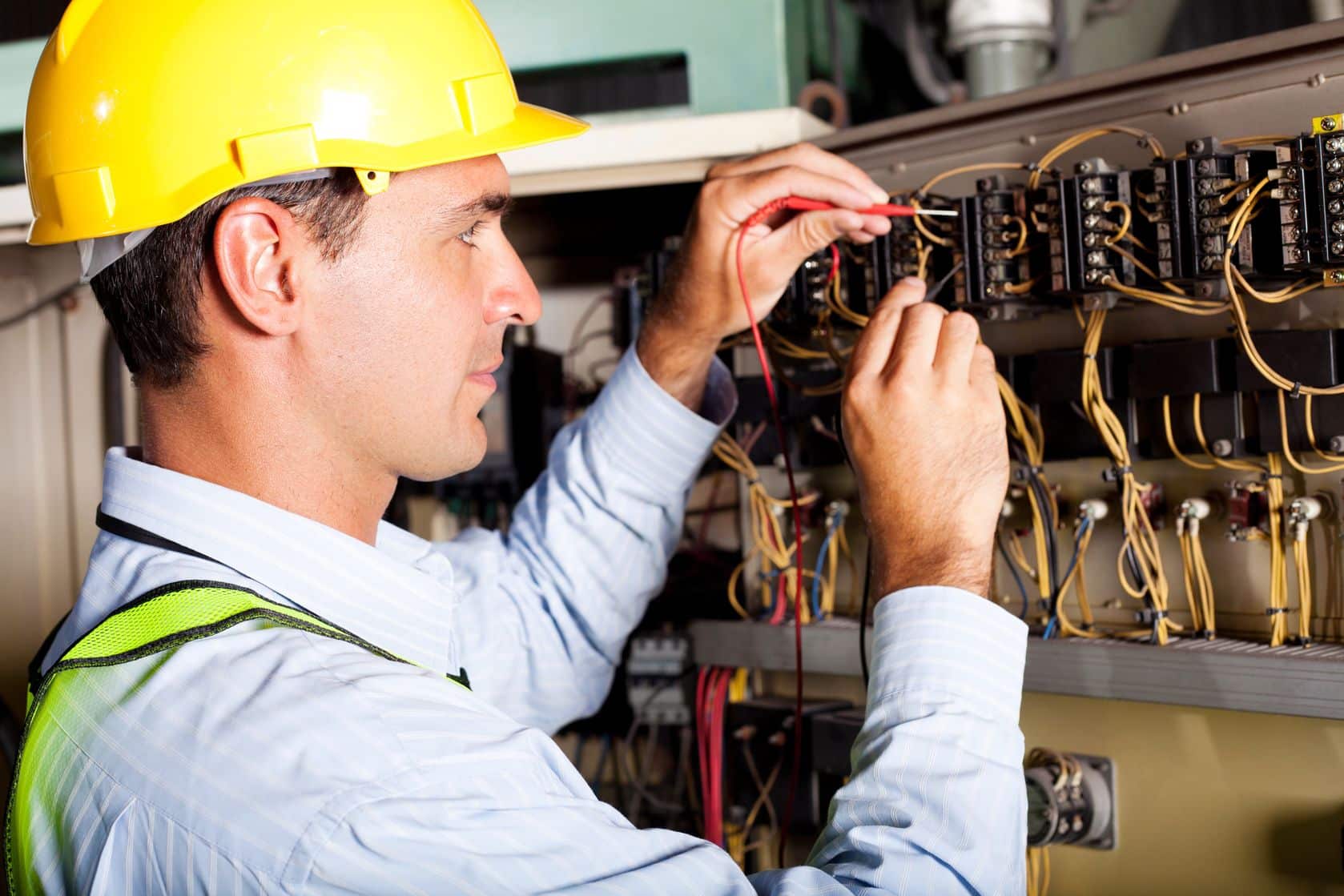
There is no single interval that fits every commercial property, because the right answer depends on what happens inside the building. A quiet two-story office with a handful of workstations carries a very different electrical load and risk profile than a machine shop running three shifts. Even so, most published guidance converges on a practical baseline: at least once every 12 months for general commercial space, with shorter intervals wherever electrical demand and risk run higher. What matters is choosing an interval that matches your building, writing it down, and keeping to it instead of reacting only after something fails.
The Baseline: Once a Year for Most Commercial Buildings
For standard commercial space, annual is the number to anchor on. Guidance covering offices, small retail units, and similar general business premises commonly recommends an inspection at least once every 12 months, and describes that annual check as the threshold for staying on top of safety and compliance. One source puts it plainly: schedule an electrical inspection at least once per year.
That annual rhythm works because twelve months is roughly the point where small, invisible problems have had time to develop without having had time to become catastrophes. A loose connection in a distribution board, a circuit running warmer than it should, or an outlet that has been overloaded one too many times may not announce itself between visits. An annual inspection is designed to catch those conditions while they are still inexpensive to correct. Treat the yearly inspection as the floor for a general commercial building, not as a ceiling that applies to every property type.
Recommended Inspection Intervals by Building Type
Published recommendations differ because they are written for different property classes. The table below groups the intervals that appear most often in industry guidance, from the lowest-risk office space to the most demanding operating environments.
| Property or use type | Suggested inspection interval |
|---|---|
| Office, small retail, general business use | Once every 12 months is typically sufficient for a well-maintained building |
| Most properties under general guidance | Every 3 to 5 years, with older properties inspected more often |
| Industrial operations | Every 1 to 3 years |
| High-risk environments | Annually |
| High-demand facilities such as data centers, manufacturing, and labs | Every 6 to 12 months |
| Buildings with heavy electrical usage | Every 6 to 12 months |
| Construction site installations | As often as every three months under risk-based periodic inspection guidance |
Read the table as a set of starting points rather than a rulebook. A property that sits between two categories, say a retail space with a commercial kitchen and a large refrigeration load, belongs closer to the shorter interval than the longer one. When the guidance for your building type is ambiguous, the safer choice is the more frequent schedule, at least until a contractor has walked the system and can speak to its actual condition.
Why Published Recommendations Range From Three Months to Five Years
The gap between an annual inspection and a three-to-five-year cycle is not a contradiction so much as a difference in scope and risk. Broad guidance that points to a three-to-five-year cycle is often describing a full periodic examination of a building’s fixed electrical installation, the kind of deep review that looks at wiring, distribution boards, and sockets as a complete system. That schedule assumes a low-risk property, a stable load, and no significant changes since the last review.
Guidance built around risk pushes intervals much tighter. Periodic inspection frameworks for commercial premises adjust the interval by property type and risk level, which is why construction site installations can fall as short as every three months while an established office building does not. Facilities carrying continuous, heavy, or business-critical loads land in the six-to-twelve-month range. The lesson is that frequency should track consequence. The harder it would be to absorb an outage or an electrical failure, the less time should pass between inspections.
Factors That Should Shorten Your Inspection Interval
Several conditions argue for inspecting more often than the general baseline for your property type.
- Age of the building. Older properties are consistently singled out as candidates for more frequent inspection, since aging wiring and equipment degrade in ways that are not visible from the outside.
- Usage intensity. Buildings running heavy electrical loads are commonly placed on a six-to-twelve-month cycle rather than an annual one.
- Facility type. Data centers, manufacturing plants, and laboratories appear repeatedly in guidance as high-demand environments warranting inspection every six to twelve months.
- Risk classification. Any property classified as a high-risk environment should be inspected annually at minimum.
- Temporary or transitional installations. Construction site electrical installations are treated as a substantially higher-risk category and inspected far more often.
- Material changes to the electrical load. Adding equipment, expanding floor space, or reconfiguring circuits changes what the system is being asked to do, and the schedule should be reassessed afterward.
Generally, any building where more than one of these factors applies should not be managed on the longest interval available for its category.
What Happens During a Commercial Electrical Inspection
A periodic electrical inspection is a systematic examination of a building’s fixed electrical systems. The intent is to confirm that the installation is safe, functional, and compliant, not simply to confirm that the lights still turn on. A typical inspection works through the system in order, starting at the service equipment and moving outward through the distribution path to the points where power is actually used.
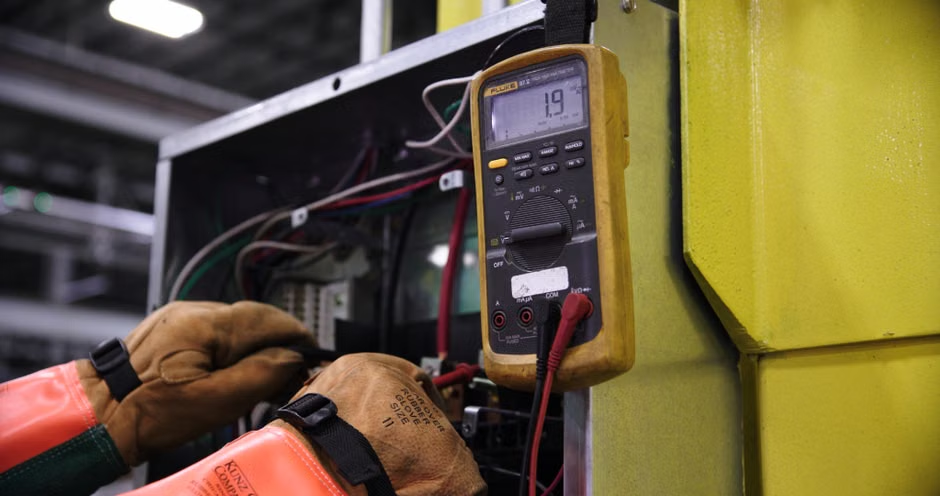
In practical terms, an inspection of this kind reviews the wiring throughout the building, the distribution boards and panels that split and protect the circuits, and the sockets and outlets that carry power to equipment and work areas. Anything found to be unsafe, worn, overloaded, or incorrectly installed is documented so that it can be prioritized and corrected. The output is not just a pass or fail. It is a picture of the system’s current condition and a list of what needs attention before it becomes a failure.
What the Inspection Interval Is Actually Protecting Against
The reason inspection frequency gets so much attention is that the failure modes are serious. Electrical faults are a recognized cause of commercial fires, and the consequences of an undetected problem extend well beyond the cost of a repair. A failing distribution board or a deteriorating circuit can take down HVAC systems, lighting, servers, refrigeration, and production equipment at the same time, and unplanned downtime of that scale is expensive in ways that rarely show up on a maintenance budget.
There is also a liability dimension. An inspection program that follows recognized intervals and documents what was found gives a property owner or facility manager a defensible record that the electrical system was being actively maintained. Skipping inspections, or letting years pass without a documented review, removes that record. If an incident does occur, the absence of a maintenance history tends to be far more difficult to explain than the cost of the inspections themselves.
Building an Inspection Schedule That Holds Up Over Time
A workable schedule is one that survives staff changes, budget cycles, and competing priorities. These steps keep it intact.
- Classify the building honestly. Decide whether it is general commercial space, industrial, high-demand, or high-risk, and start from the interval that fits the riskiest description that applies.
- Set the interval in writing. Put the inspection on the maintenance calendar as a recurring item with an owner assigned to it, so it is not dependent on someone remembering.
- Reassess after any significant change. New equipment, added circuits, an expansion, or a change in occupancy all justify revisiting the frequency rather than waiting for the next scheduled date.
- Align inspections with other maintenance. Grouping an electrical inspection with other scheduled facility work reduces disruption and makes the appointment easier to justify.
- Keep the reports. Retain inspection findings and correction records together so the building has a continuous maintenance history rather than a folder of unrelated visits.
Choosing a Contractor for Commercial Electrical Inspections
The interval matters, but so does who performs the work. A commercial electrical inspection should be handled by a licensed electrical contractor with experience in the type of facility being inspected, since the systems in an industrial plant, a retail center, and a data room are not evaluated the same way. Working with a contractor who also performs the corrective work means findings translate into a plan rather than a list of concerns that never gets addressed.
Bauer Electric Inc. has provided electrical services to commercial, industrial, and residential clients in the Ewing, New Jersey area since 1973, handling service work, engineering design, and generator installation for properties across central New Jersey and eastern Pennsylvania. If it has been more than a year since your building’s last inspection, or if the previous one was never documented, the practical next step is a walkthrough that establishes where the property actually stands.
Frequently Asked Questions
Is an annual electrical inspection required for commercial buildings?
Annual inspection is the most widely recommended baseline for offices, retail spaces, and similar commercial properties. It is described in industry guidance as the frequency that keeps a well-maintained building on top of safety and compliance. Some properties can reasonably extend beyond twelve months, but that decision should be based on the building’s condition, load, and risk level rather than convenience.
How often should an industrial facility be inspected?
Industrial operations are generally placed on a one-to-three-year cycle, with the shorter end applying to facilities with heavier loads or older equipment. Where the operation qualifies as a high-risk environment, annual inspection is recommended. Manufacturing plants and laboratories with continuous, high-demand electrical use fall into the six-to-twelve-month range instead.
Can a commercial building go five years without an electrical inspection?
General guidance for low-risk properties does cite a three-to-five-year cycle for a full periodic inspection of the fixed electrical system. That range assumes a stable building with no significant changes and a low risk profile, and older properties are consistently flagged as needing shorter intervals. A building with heavy usage or high-demand equipment should not be managed on that schedule.
What should trigger an inspection before the next scheduled date?
Any significant change to the electrical system or how it is used justifies an earlier inspection. Adding equipment, expanding into new space, reconfiguring circuits, or moving into a new occupancy all change the load the system carries. Recurring breaker trips, flickering lights, warm panels, or burning smells are also reasons to call an electrician promptly rather than wait.
What does a commercial electrical inspection include?
A periodic inspection is a systematic review of the building’s fixed electrical installation. It covers wiring throughout the property, distribution boards and panels, and sockets and outlets, with the goal of confirming the system is safe, functional, and compliant. Unsafe or deteriorating conditions are documented so they can be corrected in priority order, producing both a condition report and an action list.